When you need a pool inspection
- Selling. The contract needs a certificate, or for a sale only, a certificate of non-compliance.
- Leasing. The tenant must get a copy of a certificate of compliance or a recent occupation certificate.
- A council notice. Your council has written about the pool, or you're in a category it inspects every 3 years.
- Buying. A pre-purchase inspection tells you what needs fixing before you exchange.
- Peace of mind. You've moved in, renovated or had the fence altered and want it checked.
What a certifier checks
The certifier works out when the pool was built and which version of the Australian Standard applies, then checks the whole barrier. These are the main measurements:
- Fence height of at least 1.2 m from the finished ground, all the way around
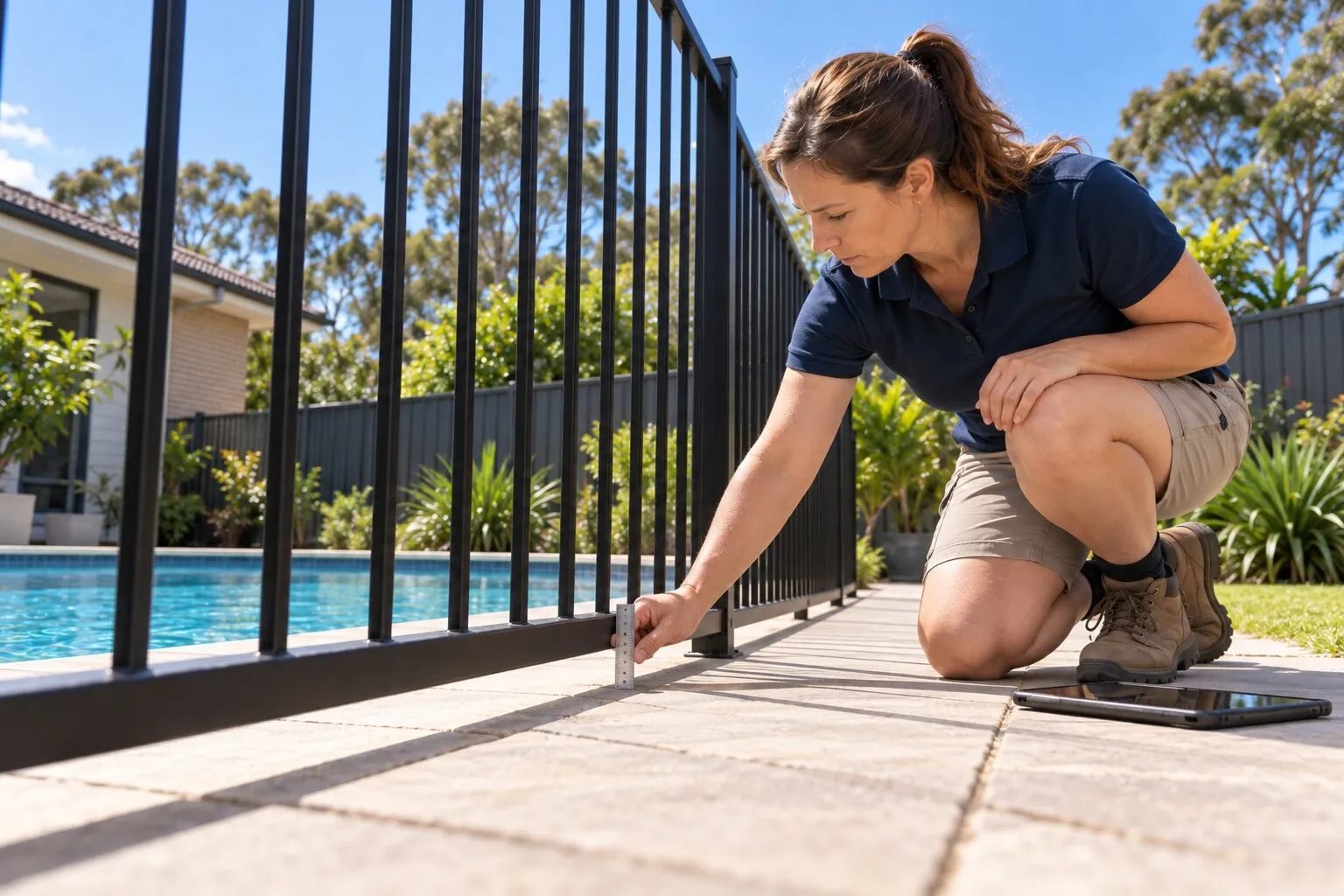
- No gap under the fence or between vertical bars over 10 cm
- A 90 cm clear zone outside the top of the fence, and 30 cm inside, with nothing to climb
- Gates that swing outwards, self-close and latch from any open position, and aren't propped open
- Boundary fences at least 1.8 m high where they form part of the barrier
- Doors and windows that open into the pool area
- A CPR sign in good condition and readable from 3 m
How to pass first time
Most failures are simple things you can sort out before the visit:
- Move pot plants, BBQs, chairs, eskies and toys away from the outside of the fence.
- Trim branches and shrubs that reach over or near the fence.
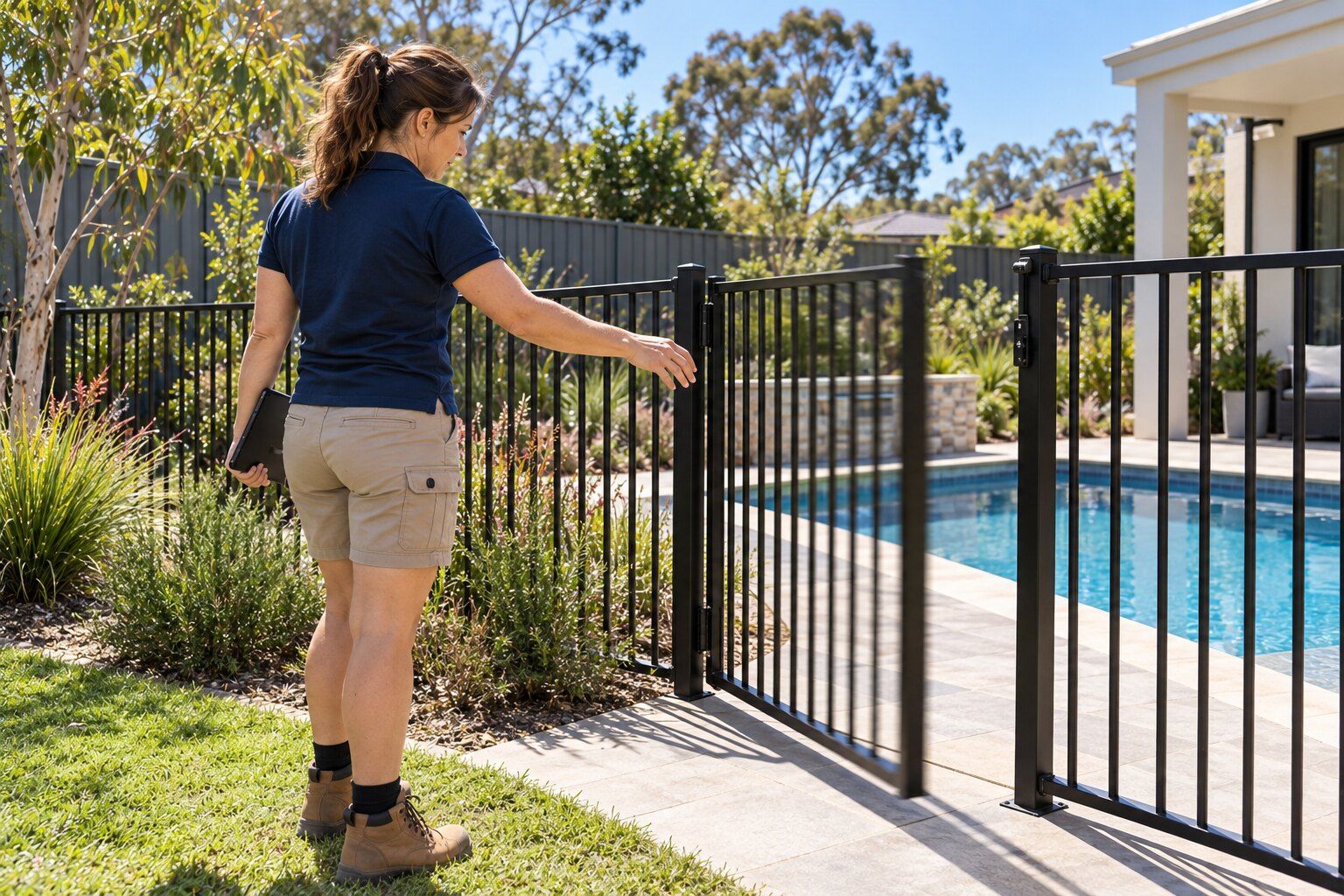
- Open the gate fully, halfway and just ajar. It should shut and latch every time.
- Check the ground under the fence hasn't dropped away and left a gap over 10 cm.
- Make sure the CPR sign is there, readable and not faded.
- Check the pool is registered on the NSW Swimming Pool Register.
The pool barrier checker takes you through each item and tells you which are likely to fail.
Council or private certifier?
Every Sydney council will inspect on request, at fees set under the Swimming Pools Regulation 2018. Waverley Council publishes $150 for the first inspection and $100 for a re-inspection. Private certifiers set their own prices: The Pool Certifier Guy publishes $295 including GST (page modified 14 August 2026) and Pool Certification Sydney publishes $450 plus GST. Ask about booking times when you have a date to meet. Every published figure is in the pool inspection cost guide, and your council's own fees are on its area page.
If you use a private certifier, check their registration on the Building Certifiers Public Register. See choosing a pool certifier for what to ask.
Who fixes what the inspection finds
You do, using whoever you choose: a licensed fencing contractor or a handyman. Fence work over $5,000 including GST needs a contractor licence. For bigger jobs, see pool fence repairs and pool gate repairs.
Common questions
How long does a pool inspection take?
Most backyard pools are inspected in one visit. Larger barriers, several gates or a pool with doors and windows near it take longer. Ask the certifier when you book.
Do I need to be home for the inspection?
Someone needs to give the certifier access to the pool area and any part of the house that opens onto it. Confirm the arrangements when you book.
What happens if the pool fails?
You get a written list of defects. Fix them, then book a re-inspection. If you're selling, a certificate of non-compliance can go with the contract instead, and the buyer has 90 days from settlement to fix the items.
Should I use the council or a private certifier?
Council fees are set by regulation, so they're usually cheaper, but some have waiting times. Canada Bay Council, for one, says it's experiencing significant delays. Private certifiers cost more, and their booking times vary.
Can I get a pre-purchase pool inspection?
Yes. A buyer can ask a registered certifier to inspect before exchange. Pool Certification Sydney, for one, publishes a pre-purchase inspection at $450 plus GST.
Where this information comes from
The rules and prices on this page come from these published pages, checked on 16 October 2026.
- NSW Government: Owning a pool or spa, your obligations · Building Commission NSW guide to barriers, registration, sale and lease certificates and CPR signs (updated 16 March 2026)
- NSW Swimming Pool Register self-assessment checklist (pools built after 1 May 2013) · Register checklist rehosted by Oberon Council, undated
- Waverley Council: Pool barrier inspection request · Council fees and the Australian Standard that applies by construction date (last updated 30 June 2026)
- The Pool Certifier Guy · Sydney pool certifier, published prices including GST (page modified 14 August 2026)
- Pool Certification Sydney: Fees · Sydney pool certifier, published fees plus GST (undated)
Related guides
- Pool fence regulations in NSW (2026)The barrier measurements, gate rules, the Australian Standard for your pool's age, and how registration and certificates fit together.
- Pool CPR signs in NSWWhat a pool resuscitation sign must show, the 3 m readability test, the 2019 change, when an older sign is still fine, and portable pools.
- Spa and inflatable pool rules in NSWWhen a spa lid can stand in for a fence, why swim spas may need one, and the 300 mm rule that brings inflatable and above-ground pools under the barrier rules.